












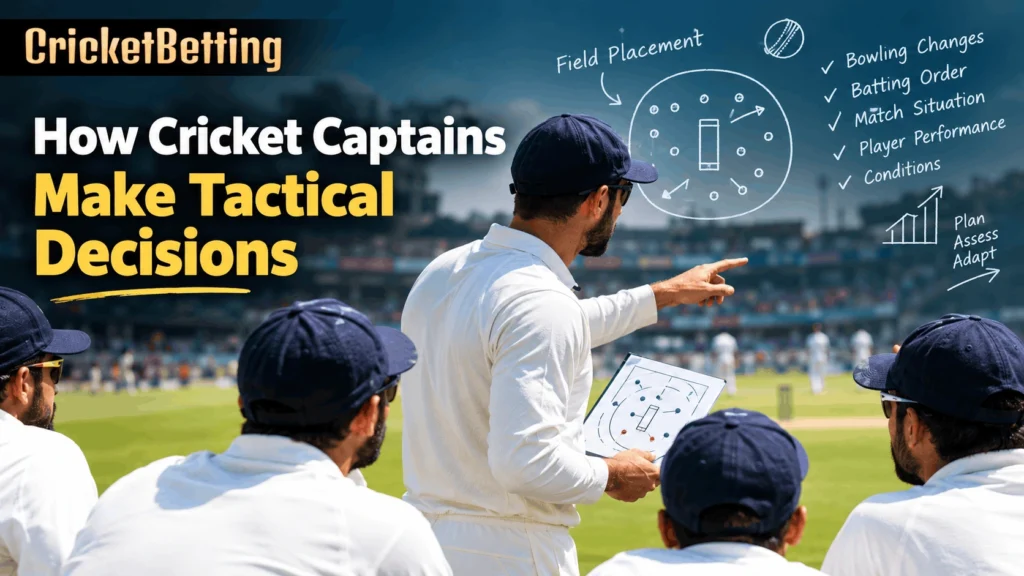
A cricket captain has to make decisions continuously throughout a match. From choosing field positions to changing bowlers and adjusting the batting order, captaincy involves responding to constantly changing circumstances.
Good cricket captain tactics are not based on one fixed plan. Captains need to assess the pitch, opposition, weather, player performance and match situation before deciding what to do next.
Reading the Match Situation
One of the first responsibilities of a captain is understanding what is happening in the game.
The same score can require completely different tactics depending on the number of wickets remaining, overs available, pitch conditions and quality of the opposition.
A captain therefore needs to consider the bigger picture rather than reacting to an individual delivery or over.
Setting the Field
Field placement is one of the most visible parts of captaincy.
Captains position fielders according to the type of bowling being used and the weaknesses they believe can be targeted.
For example, a captain may place additional protection on the boundary when a batter is attacking aggressively.
Alternatively, close fielders can be used when the captain wants to create pressure and encourage mistakes.
Field positions can also change according to the batter’s preferred scoring areas.
Explore More: cricketbetting-IPL Cricket Betting – IPL Matches, Markets And Odds
Choosing Bowling Changes
Bowling changes are another important tactical decision.
Captains need to manage their available bowlers while considering the conditions and the opposition’s batting lineup.
A fast bowler may be introduced when pace or movement appears useful. A spinner may be brought into the attack when the surface begins offering grip or when the captain wants to change the rhythm of the innings.
The timing of these changes can be just as important as the choice of bowler.
Attacking and Defensive Captaincy
Captains constantly balance attack and defence.
An attacking approach might involve placing fielders close to the batter and searching for wickets.
A defensive approach may involve protecting boundaries and forcing the batter to take greater risks to score quickly.
Neither approach is always correct. The best decision depends on the match situation.
A captain defending a small total may need to take calculated risks, while a captain protecting a comfortable position may prefer to reduce scoring opportunities.
Managing the Batting Order
Captains and coaching teams can also influence how the batting lineup is used.
A player may be promoted because the team wants an aggressive approach, while another batter may be held back for a later stage when their skills are considered more valuable.
All-rounders can provide additional flexibility because they can contribute with both bat and ball.
Batting decisions are therefore closely connected to the team’s overall strategy.
Responding to Individual Players
Captains also need to react to how individual players are performing.
If a bowler is creating consistent pressure, the captain may continue using them.
If a batter is struggling against a particular type of bowling, the captain may try to exploit that weakness through field placement or bowling changes.
At the same time, captains must avoid making unnecessary changes simply because something has not worked immediately.
Using Match-Ups
Modern cricket increasingly involves analysing how particular players perform against specific types of opponents.
A captain may consider whether a batter is more comfortable against pace or spin and select the appropriate bowling option.
Field placements can also be adjusted according to a batter’s scoring patterns.
However, statistics are only one part of the decision-making process. Conditions and what is happening on the field still matter.
Adapting to Changing Conditions
Weather and pitch conditions can change the tactical picture.
Cloud cover, wind, moisture and changes to the playing surface can influence bowling choices and batting plans.
A captain who recognises these changes early may adjust the team’s approach before the opposition can take advantage.
Adaptability is therefore one of the most important qualities in effective captaincy.
Communication With the Team
Captaincy is not only about making decisions personally.
Captains communicate with bowlers, wicketkeepers and fielders throughout an innings. They may discuss field positions, bowling plans and observations about the batter.
The wicketkeeper can be particularly valuable because they have a close view of the ball and often communicate directly with the captain.
Good communication helps ensure that tactical decisions are understood and executed correctly.
Why Captaincy Can Influence a Match
Cricket is a team sport, so captaincy cannot replace individual performance.
However, tactical decisions can influence how effectively a team uses its available players and responds to changing circumstances.
The ability to recognise opportunities, manage pressure and adapt plans can make a significant difference during closely contested matches.
Read More: cricketbetting-Betting App Cricket – Cricket Betting Features And Markets
Final Thoughts
Cricket captain tactics involve much more than choosing a bowler or moving a fielder.
Captains need to understand the match situation, evaluate player performance, manage resources and respond to changes in conditions. They also need to balance attacking opportunities with defensive requirements.
Ultimately, successful captaincy comes from combining preparation with the ability to make clear decisions when circumstances change.
FAQs
1. What does a cricket captain do?
A cricket captain leads the team on the field and makes tactical decisions involving field placements, bowling changes and overall match strategy.
2. Why are field placements important?
Field placements can restrict scoring areas, create pressure and support a particular bowling plan.
3. How do captains decide when to change bowlers?
They may consider the pitch, batter, bowler performance, scoring rate, match situation and remaining bowling resources.
4. Can a captain change the batting order?
Yes. Teams can adjust how players are used depending on the match situation and tactical requirements.
5. What makes a good cricket captain?
Good captains generally combine tactical awareness, communication, decision-making, adaptability and an understanding of their players.
6. Do statistics influence captaincy decisions?
They can. Statistical information may help identify player tendencies and useful match-ups, but captains also need to consider current conditions and what is happening on the field.